The short answer
There are four ways to get a short promo video, and they’re priced by what they include. Doing it yourself costs your time. A freelancer or gig-site seller varies widely. A filmed shoot with a UK crew is usually quoted in the hundreds to thousands of pounds: one 2026 guide puts a typical social media or promo video at £800 to £2,500. A film made from photographs you already have can cost less, because there’s no filming. Whichever you choose, compare what’s included, not just the headline price.
You’ve had a quote for £2,000 and it felt like a lot for a minute of video. Or you’ve seen £50 offers online and wondered what the catch is. Both can be fair prices for what they include. The trick is knowing what you’re actually buying.
This guide sets out the four routes, what drives the cost on each, and the questions that make quotes comparable.
Route 1: Do it yourself
What it costs: your time, plus possibly an app subscription.
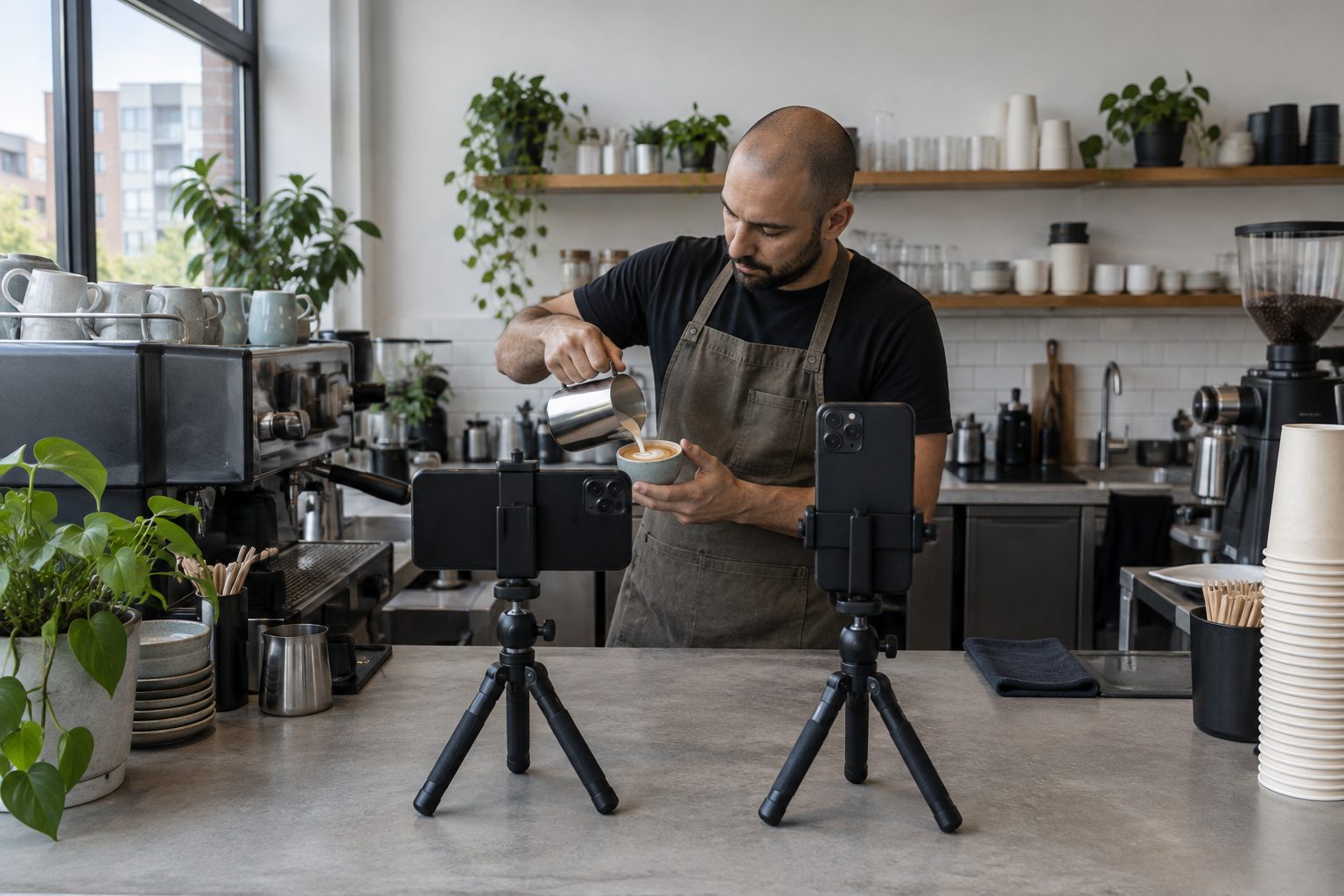
A recent phone films well enough for a short business video. Editing apps range from free to a monthly subscription. CapCut, for example, has a free plan with basic editing tools and paid tiers above it; check the current UK price on any app’s own pricing page before you sign up.
Suits
owners who are comfortable on camera, have time, and want lots of small clips for social media rather than one polished film.
Watch out for
- the hours. Planning, filming, editing and captioning all take time, more so the first time. Count them honestly;
- music. Read the app’s terms to see whether its music can be used outside the app, including on your website and in ads;
- sound. Listen back before you edit. If there’s speech, wind and traffic noise are hard to remove afterwards, so record somewhere quiet or record the voice separately.
Route 2: A freelancer or gig site
What it costs: prices on gig sites and from local freelancers vary so widely that a single figure would mislead you. Judge each offer on what it includes.
Suits
a clear, simple brief where you can judge the result from the seller’s portfolio.
Watch out for
- portfolios that don’t look like your kind of business;
- how many rounds of changes are included, and what further changes cost;
- who licensed the music, and whether that licence covers your website and ads;
- whether you get both shapes (landscape and portrait) or one cropped into the other;
- who owns the finished film and the raw files.
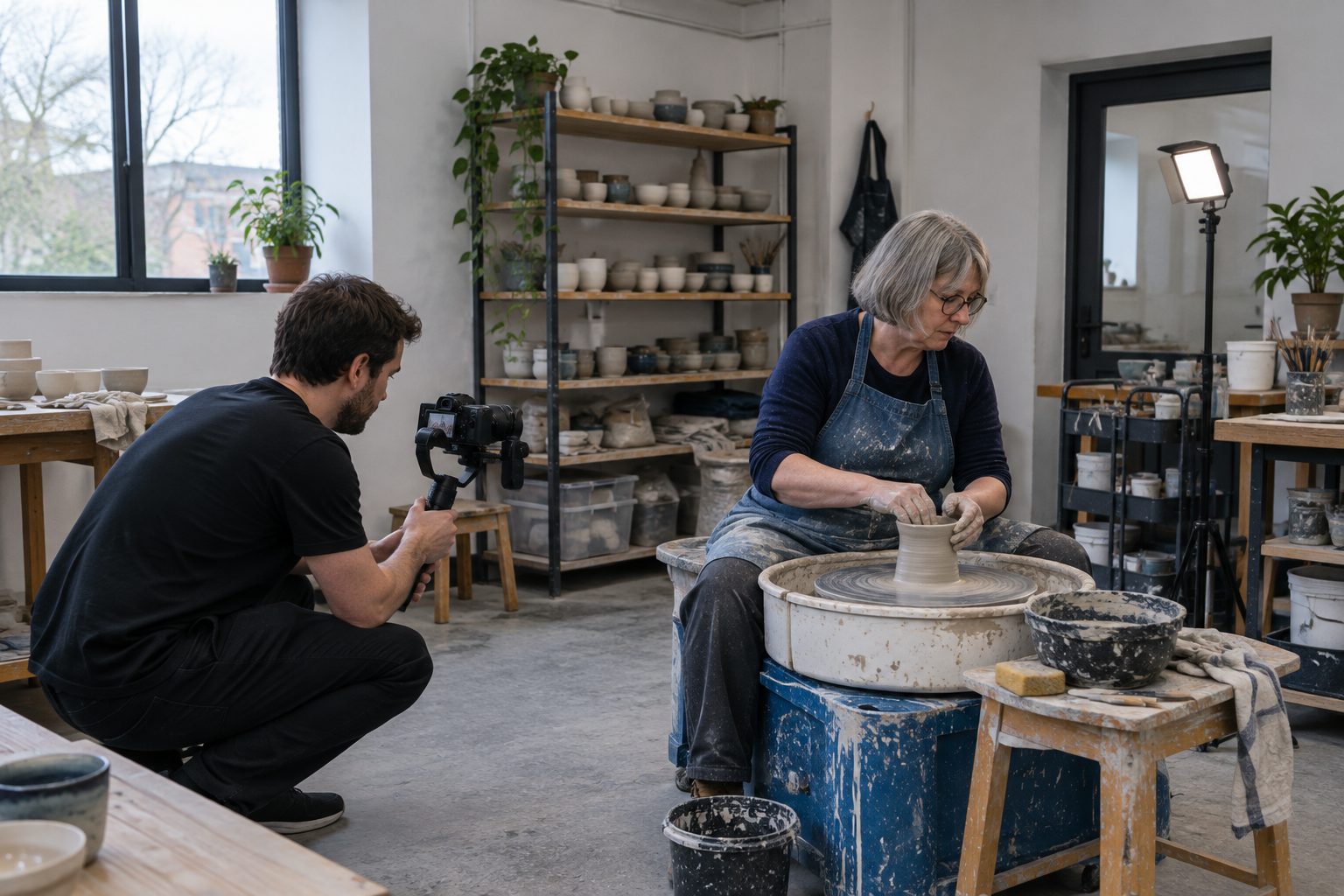
Route 3: A filmed shoot with a local crew
What it costs: this is where most published UK price guides sit. Two examples, both checked on 11 October 2026:
| Source | What it quotes |
|---|---|
| Steadyhand’s 2026 guide (7 July 2026) | A social media or promo video typically £800 to £2,500. A crewed half-day shoot usually £800 to £1,500, a full day £1,200 to £2,500, and editing £400 to £800 a day on top. It notes some guides carry a London premium. |
| MOTION3’s 2026 guide (11 July 2026) | Brand films £3,500 to £7,000 + VAT per film. |
At the lower end, SuperHub advertises a filmed 30-second promo video from £449.99, with travel days that depend on where you are.
What drives the price: Steadyhand names three things: how many days of filming, how many locations, and how complex the edit is. MOTION3 adds larger crews, drone work, licensed music, complex animation and long approval chains.
Suits
businesses that need to show something happening live, such as a process, an event or people talking to camera, or that want a film to last several years.
Watch out for
a low headline price that covers a half-day in one place, when your business really needs two locations and three people interviewed.
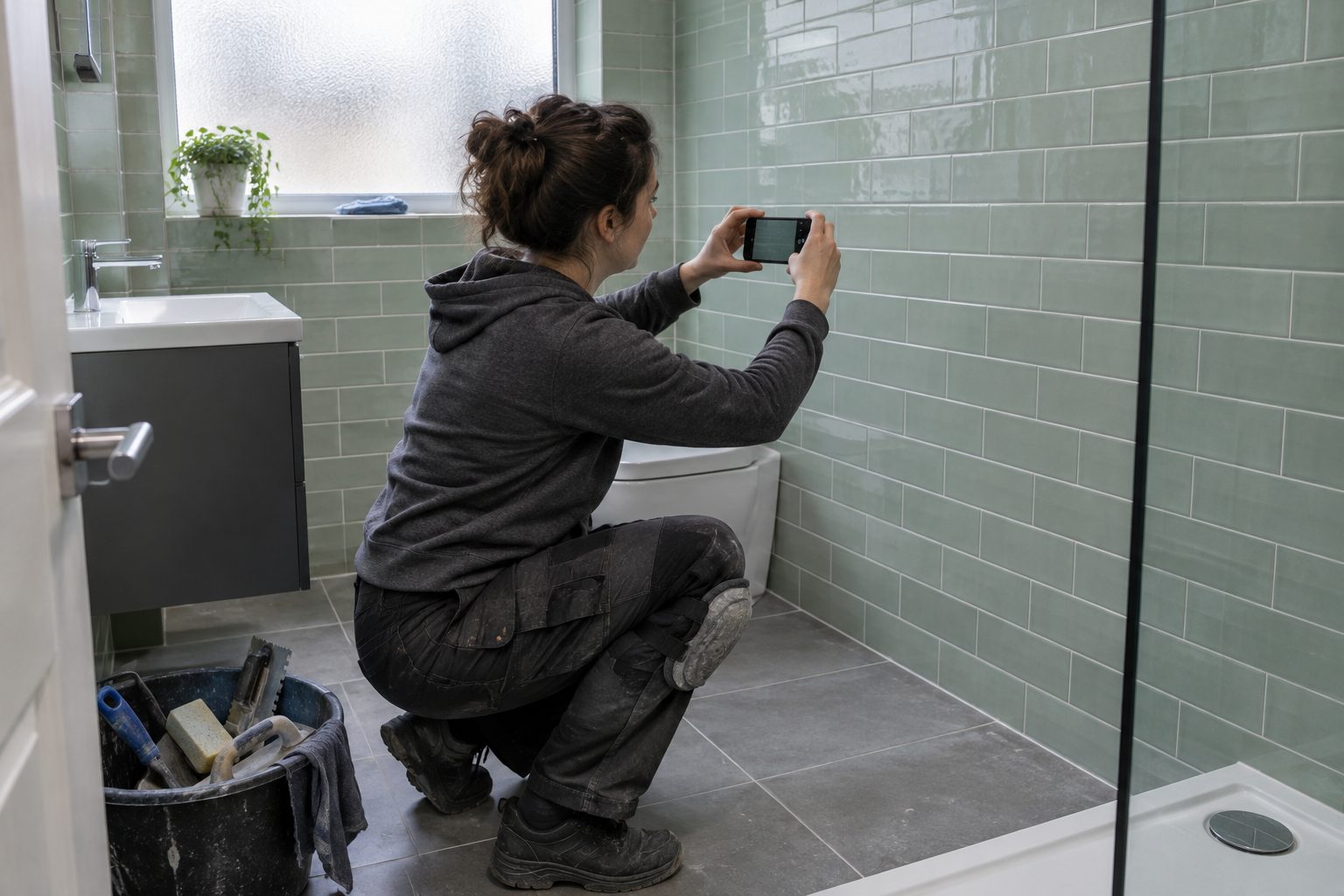
Route 4: A film made from your own photographs
What it costs: it avoids the biggest costs of a shoot, which the guides above name as filming days, locations and crew.
You send photos you already have, of finished jobs, your premises, your team, plus your logo and what you want to say, and the film is made from those.
Suits
- trades and services with a phone full of finished jobs;
- holiday lets, shops and venues with good photos of the place;
- businesses that want a 30 or 60-second film for a website and a Google profile, not a documentary.
Doesn’t suit:
- anything that needs to show a process moving in real time;
- interviews or people talking to camera;
- businesses with no usable photos. In that case, take some first, or choose a shoot.
Watch out for
the quality of the photos you send. The film can’t be better than the pictures it’s made from.
What changes the price on any route
| Cheaper | Dearer |
|---|---|
| 30 seconds | Several minutes |
| One shape | Landscape and portrait, each laid out separately |
| One round of changes | Unlimited changes, or several people approving |
| Your existing photos or footage | New filming, several locations, several days |
| Library or app music | Specially licensed or composed music |
| No voiceover, or your own voice | A professional voice artist |
“Dearer” isn’t always worse value. Both shapes, for instance, save you having a second film made later.
Questions to ask before you pay
- How long will the finished film be?
- Will I get landscape and portrait, and is the portrait version laid out for phones or just cropped?
- How many rounds of changes are included? What does another round cost?
- Are captions included, burned in or as a separate file?
- Is the music licensed for my website, social media and ads?
- Who owns the finished film? Can I have the files to use anywhere?
- How long from sending everything to getting the finished film?
- Is the price fixed, and does it include VAT?
Get the answers in writing. Two quotes that look far apart often turn out to be for quite different things.
If you’d rather not make it yourself, VideoWorks films start from £299 + VAT, made from your own photographs, with landscape and portrait versions and captions included. The pricing page lists everything that comes with a film.